

Why Putting a Face to Your Brand Builds Trust
Putting a face to your brand can make it easier for people to recognize, understand, and trust the business behind the content. That face might be a founder, an employee creator, a customer community, or a mascot. What matters is not whether the face is human. It is whether the audience encounters a consistent personality with a clear point of view.
For small brands, humanizing the business does not require turning the founder into a full-time influencer. It means choosing a recognizable presence, giving it a role, and using it consistently across profile imagery, videos, comments, and recurring stories.
The short version
- Faces attract attention and help audiences identify who is speaking.
- A consistent person or character can make a brand feel more familiar over time.
- Founders offer authority, employee creators offer range, and mascots offer continuity.
- The right brand face should fit the business, the content workflow, and the team's boundaries.
- Personality earns attention only when the content still provides useful information, entertainment, or proof.
What Does It Mean to Humanize a Brand?
Humanizing a brand means giving people recognizable social cues they can connect with: a face, voice, personality, perspective, and repeatable way of interacting.
A logo can help someone identify a business. A brand face helps them understand who the business is. It turns an abstract company into a more familiar presence that can explain a product, react to a trend, tell a story, answer a question, or admit a mistake.
That presence can take several forms:
- A founder who shares expertise and the story behind the company.
- An employee or social creator who hosts videos and represents the team.
- Customers and community members who demonstrate what the brand makes possible.
- A mascot or animated character with a defined personality.
The goal is not to manufacture intimacy or pretend that a company is a person. The goal is to communicate in a way that feels specific, accountable, and consistent enough for an audience to recognize.
Why Faces Capture Attention
Humans are especially responsive to faces. Neuroscience research has identified a region in the visual system known as the fusiform face area that is strongly involved in face perception. The foundational study did not test advertising performance, but it helps explain why faces are unusually important visual information for people. (Kanwisher, McDermott, and Chun, 1997)
Social media research points in the same direction. Georgia Tech and Yahoo Labs researchers analyzed 1.1 million Instagram photos and found that images containing human faces were 38% more likely to receive likes and 32% more likely to receive comments than images without faces. The study shows an association, not a guarantee that adding a face will improve every post. It does show that faces are a meaningful creative variable rather than a decorative detail. (Georgia Tech, 2014)
For a brand, that matters in several places:
- A profile image has to remain recognizable at a very small size.
- A video has only a brief opening in which to establish who is speaking and why the viewer should care.
- A familiar host or character can connect separate posts into one recognizable series.
- Facial expressions can communicate tone before a caption or voiceover explains it.
A face cannot rescue an unclear idea. It can, however, make the source and tone of that idea easier to read.
Why a Consistent Personality Can Build Trust
Trust is not created by a headshot alone. It develops when the audience repeatedly sees a recognizable presence make clear claims, demonstrate useful knowledge, and respond like an active participant rather than a broadcast account.
This principle can also apply to nonhuman characters. In marketing research, brand anthropomorphism means giving a brand human-like traits, intentions, or behaviors. A longitudinal experiment published in Telematics and Informatics found that anthropomorphizing a brand on social media strengthened perceived social presence and consumer-brand relationships. Participants also treated the anthropomorphized brand as a more trustworthy relationship partner. (Kim, Sung, and Moon, 2020)
That does not mean every company needs a mischievous mascot or an outspoken founder. It means people need enough consistency to form expectations. They should understand how the brand sounds, what it cares about, what it knows, and how it is likely to respond.
The strongest brand faces therefore do four things:
- Show up consistently. The same person or character appears often enough to become recognizable.
- Provide real value. The content teaches, demonstrates, entertains, or answers a relevant question.
- Stay connected to the product. Personality supports what the business does instead of becoming an unrelated performance.
- Behave predictably. The tone may be playful or serious, but it follows clear boundaries.
Three Ways to Put a Face to Your Brand
There is no universal best model. The right choice depends on how the business builds trust, who can sustainably make content, and whether the brand should remain tied to one individual.
| Brand face | Best fit | Primary strength | Main risk |
|---|---|---|---|
| Founder or executive | Expertise-led services, founder stories, B2B brands, and mission-driven companies | Direct authority and accountability | Content can become dependent on one person's time or reputation |
| Employee or community creator | Businesses with several stories, locations, products, or customer perspectives | More voices and a scalable content pipeline | Inconsistent tone or disruption when a visible employee leaves |
| Mascot or character | Apps, consumer brands, ecommerce, and teams that want a personality they can own long term | Continuity, creative flexibility, and clear brand ownership | The character can feel forced if its personality has no connection to the product |
Founder or Executive
A founder is often the clearest choice when expertise and origin are central to the buying decision. They can explain why the company exists, demonstrate subject knowledge, and make decisions visible.
The founder does not need to document every day. A sustainable version might be one monthly filming session that produces product explanations, customer questions, lessons learned, and short opinions. The important part is that the founder's presence serves the audience rather than functioning as a stream of company announcements.
Employee or Community Creator
An employee creator can make the company feel accessible without putting every post on the founder. A chef can demonstrate a process, a customer-support lead can answer frequent questions, or a social media manager can become a recurring host.
Small brands can also treat their customers as a distributed group of faces. Testimonials, demonstrations, collaborations, and user-generated content show the product in real situations while allowing more than one person to represent what the brand enables.
This model needs a simple system: permission to feature participants, a shared understanding of tone, and a plan for transferring a series if its original host changes roles.
Mascot or Character
A mascot gives the company a face without making the brand dependent on one employee. It can appear in illustrations, videos, comments, product moments, and recurring jokes while remaining an asset the business controls.
The mascot still needs a job. Decide what it knows, what it wants, how it speaks, what it will never joke about, and how it connects to the product. A character that only decorates posts is less useful than one that helps explain the brand or creates a recognizable narrative.
What Duolingo's Mascot Strategy Shows
Duolingo demonstrates how a mascot can become an active media character rather than a static logo. Duo the Owl appears in recurring storylines, reacts to culture, interacts with other accounts, and translates product concepts such as streaks into recognizable social behavior.
In a 2025 TikTok campaign in Germany, Duolingo extended the audience's existing jokes about Duo into a larger story built around the mascot's supposed death and revival. TikTok reports that the campaign generated 34.83 million impressions, reached 26.89 million people, and achieved a 12.63% engagement rate. Those are results from one paid and organic campaign, not a universal benchmark for mascot content. The useful lesson is that the character connected product behavior, community lore, and platform-native storytelling in one repeatable identity. (TikTok for Business, 2025)
Duo works because the character has a recognizable motivation and voice. The brand is not simply placing an owl in unrelated trends. It is using the mascot to turn reminders, streaks, and the emotional experience of language learning into stories people can recognize and join.
How to Make a Brand Face Work on Social Media
Choosing the face is only the first step. The audience needs repeated, coherent encounters with that presence.
1. Define the Role
Write one sentence explaining what the brand face does for the audience. For example: “Our founder helps local business owners understand video marketing,” or “Our mascot turns the frustrations of content creation into useful, lighthearted advice.”
If the role is unclear, the content will drift toward generic trends or internal company news.
2. Set the Voice and Boundaries
Choose three to five traits that guide how the person or character communicates. “Curious, encouraging, practical, and lightly playful” is more actionable than “authentic.” Then document boundaries around humor, customer conversations, sensitive topics, and claims.
This is especially important when several employees write for one mascot or brand account.
3. Update the Most Visible Touchpoints
Use a clear, high-contrast portrait or expressive character image where it will remain legible as a profile icon. Carry the same visual identity into video openings, thumbnails, pinned posts, and recurring series.
The aim is recognition, not uniformity. The content can vary while the source remains familiar.
4. Create Repeatable Formats
Build a few series that the brand face can reliably host:
- Answers to common customer questions.
- Behind-the-scenes decisions or demonstrations.
- Reactions to relevant industry news or trends.
- Customer stories and community spotlights.
- A recurring challenge, experiment, or progress update.
Repeatable formats make consistency easier and give the audience a reason to recognize the next post.
5. Participate Instead of Only Publishing
A humanized brand should act like a participant. Reply to comments in the established voice, ask follow-up questions, acknowledge useful criticism, and contribute thoughtfully to conversations beyond the brand's own posts.
Measure whether that participation improves meaningful outcomes: profile visits, saves, shares, qualified comments, repeat viewers, direct messages, leads, or purchases. Likes can reveal attention, but the most useful metric is the one connected to the content's goal.
What Is PromoCut Doing?
PromoCut does not currently depend on one human spokesperson. In a meaningful sense, PromoCut's users are the faces of the brand: small businesses and creators use the product to turn their own footage, expertise, products, and personalities into videos for the audiences they want to reach.
That community-led model keeps the focus on the people PromoCut is designed to help. The product is not meant to replace their voice. It helps them shape the footage they already have into something ready to share.
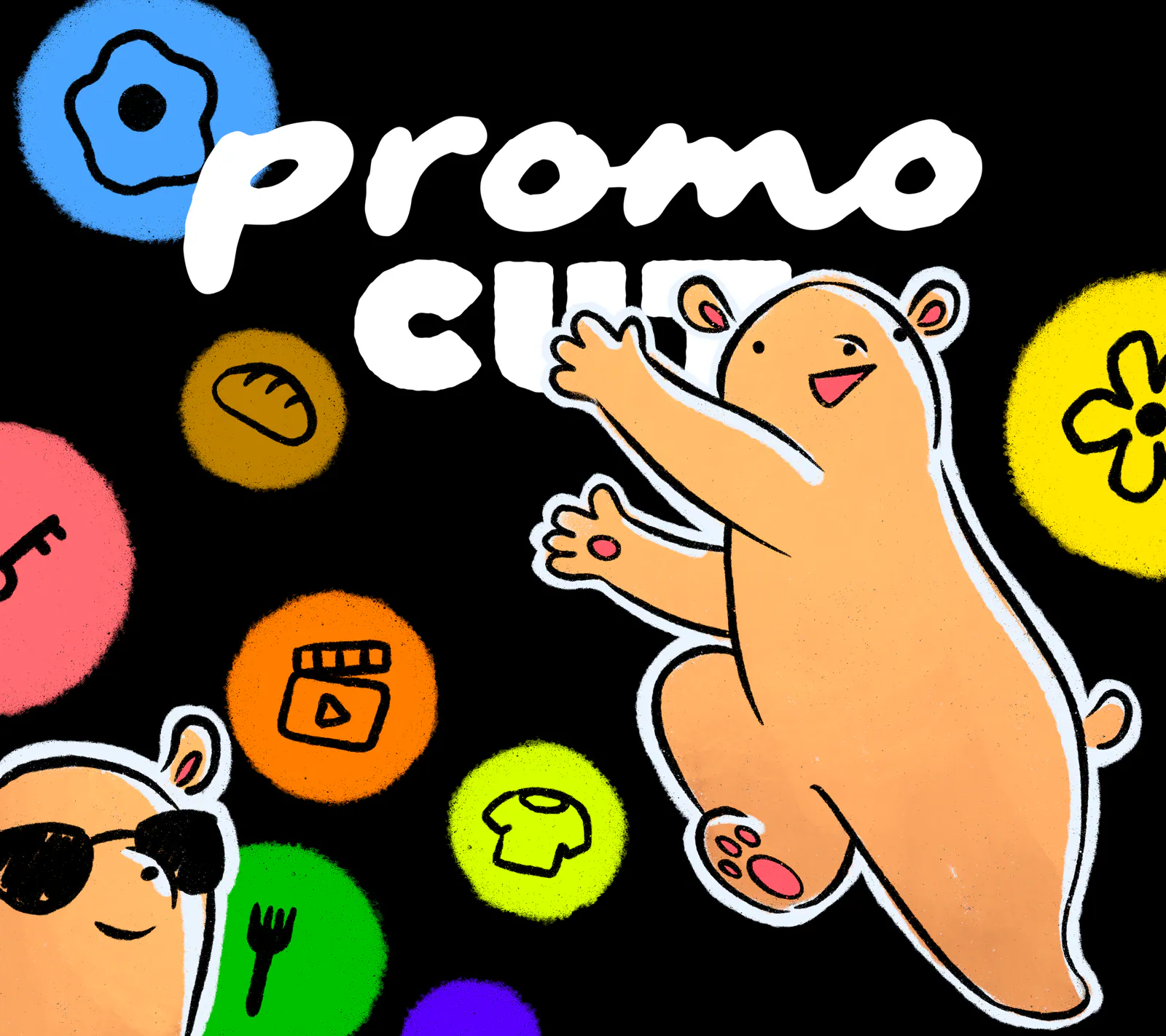
PromoCut has also created a character of its own: Promo Cub. The name began as a play on words, then grew into a beloved internal mascot. Promo Cub may appear in the app and is beginning to pop up across PromoCut's social presence.
The character gives PromoCut a recognizable face without competing with the customers at the center of the product. Promo Cub can represent the helpful, curious side of the brand while PromoCut's users continue to show the many real people and businesses the tool supports.
That balance is the larger lesson for any small brand. Putting a face to the business does not mean making one personality more important than the customer. The best brand face creates a welcoming point of connection, then helps the audience see where they fit in the story.
A Simple Brand Humanization Checklist
Before changing a profile picture or launching a character, answer these questions:
- Who or what will represent the brand most consistently?
- What useful role will that person or character play for the audience?
- Which three personality traits should every post communicate?
- What topics, jokes, or claims are outside the brand's boundaries?
- Which two recurring content formats can the team sustain for three months?
- How will the brand reply and participate between published posts?
- Which audience or business metric will show whether the strategy is working?
A brand does not become human because it uses a portrait, publishes casual videos, or gives a mascot a name. It becomes more relatable when people can recognize a consistent presence, understand its purpose, and see evidence that someone is listening on the other side.
Frequently Asked Questions
What does it mean to humanize a brand?
Humanizing a brand means giving it recognizable social qualities such as a face, voice, personality, perspective, and consistent way of interacting. The face can be a founder, employee, customer community, mascot, or animated character.
Does a brand need a human spokesperson?
No. A real person can create authority and direct accountability, but a well-defined mascot or character can also make a brand recognizable and socially engaging. The best choice is the one the business can sustain consistently.
Can a mascot humanize a brand?
Yes. Marketing research suggests that anthropomorphic brands can create stronger social presence and consumer-brand relationships. A mascot works best when it has a clear role, consistent personality, and meaningful connection to the product.
Should the founder be the face of the brand?
A founder is a strong choice when expertise, mission, or the origin story influences the buying decision. It may be a poor fit when the founder cannot participate consistently, wants strong privacy boundaries, or wants the brand to remain independent of one person.
How can a small brand start humanizing its content?
Choose one recognizable host or character, define its role and voice, and create two repeatable content formats. Use the same presence consistently in videos, profile imagery, and community replies, then measure outcomes tied to the brand's goal.